
Recent conveyor belt orders, from compound and inspection through packing and site installation. The photographs are the same shipment and job photos used on the original case notes.
16 Oct 2026 · Manila, Philippines
From compound to finished belt: a shipment for Manila
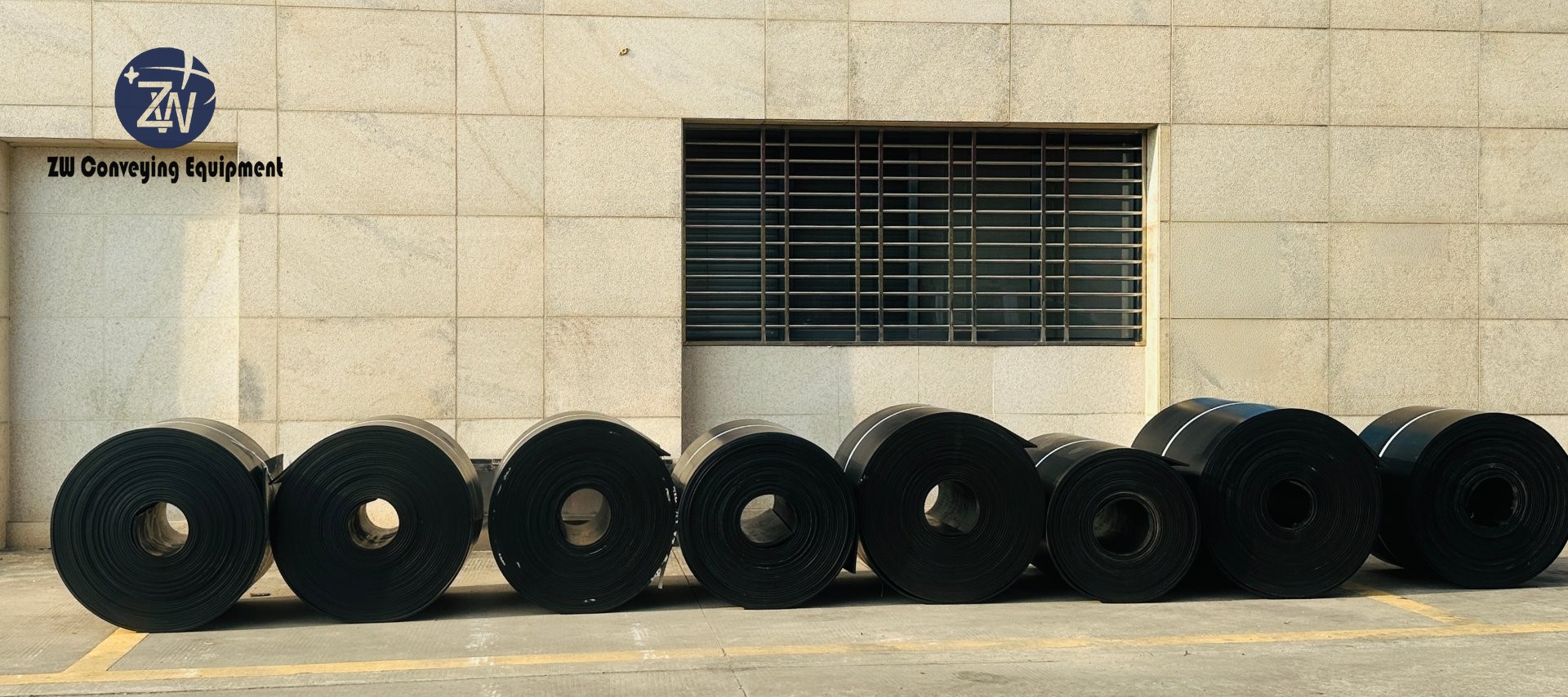
The belts made for a buyer in the Philippines are off the line and waiting to be packed for Manila. They will go into the material-handling system on site, so the order was built to that climate rather than to a stock cover.
Manila stays hot and wet, with a long rainy season. The technical team set the rubber compound for that duty, then checked carcass, cover and the finished rolls before they left the yard. The photograph shows those rolls outside the plant, still open, just before packing.
The same checks apply to later orders for mining, port and plant lines in Southeast Asia: specify the site first, then cut the belt.
03 Oct 2026 · Ha'il, Saudi Arabia
From compound to finished belt: a shipment for Ha'il
A made-to-order belt batch for a customer in the Middle East is packed and ready to leave for the Ha'il region. It will build the material-handling line of an open-pit phosphate mine.
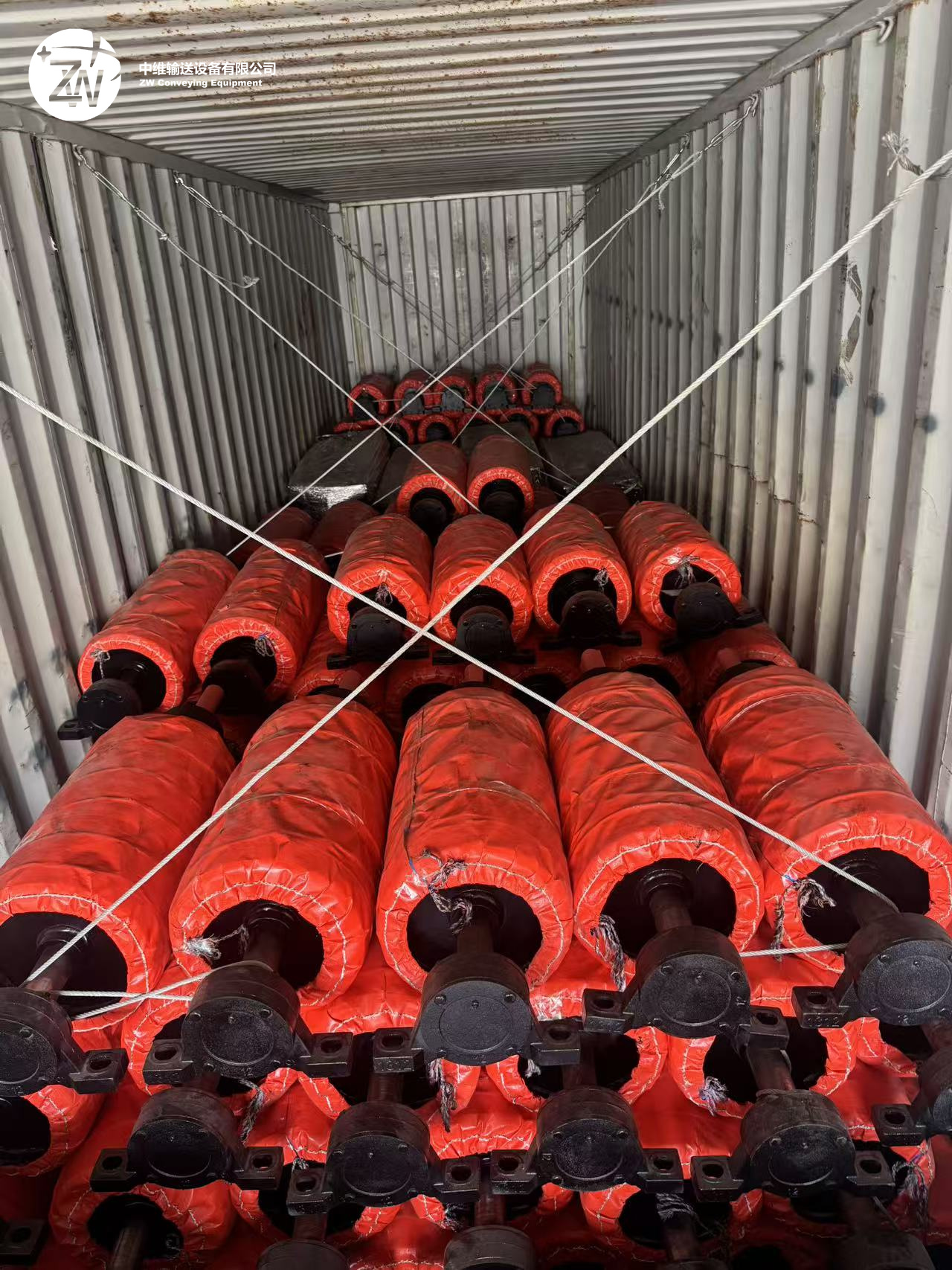
Ha'il is hot all year, with dry air and frequent sand. The cover compound was adjusted for that abrasion and heat, and the belts were inspected from carcass and formulation through to the final check before dispatch. The container photograph is the packed mechanical load from the same export window: rollers and pulleys wrapped, lashed and ready to ship with the order.
Further supply for mining and industrial customers in the Middle East follows the same rule: match the compound to the pit, then pack so the goods arrive as they left the plant.
September 28, 2026 · East Kalimantan, Indonesia
Conveyor belt for a coal mine main line
Belts made for an Indonesian customer are loaded and about to ship to East Kalimantan. They will form the haulage line of an open-pit coal mine.
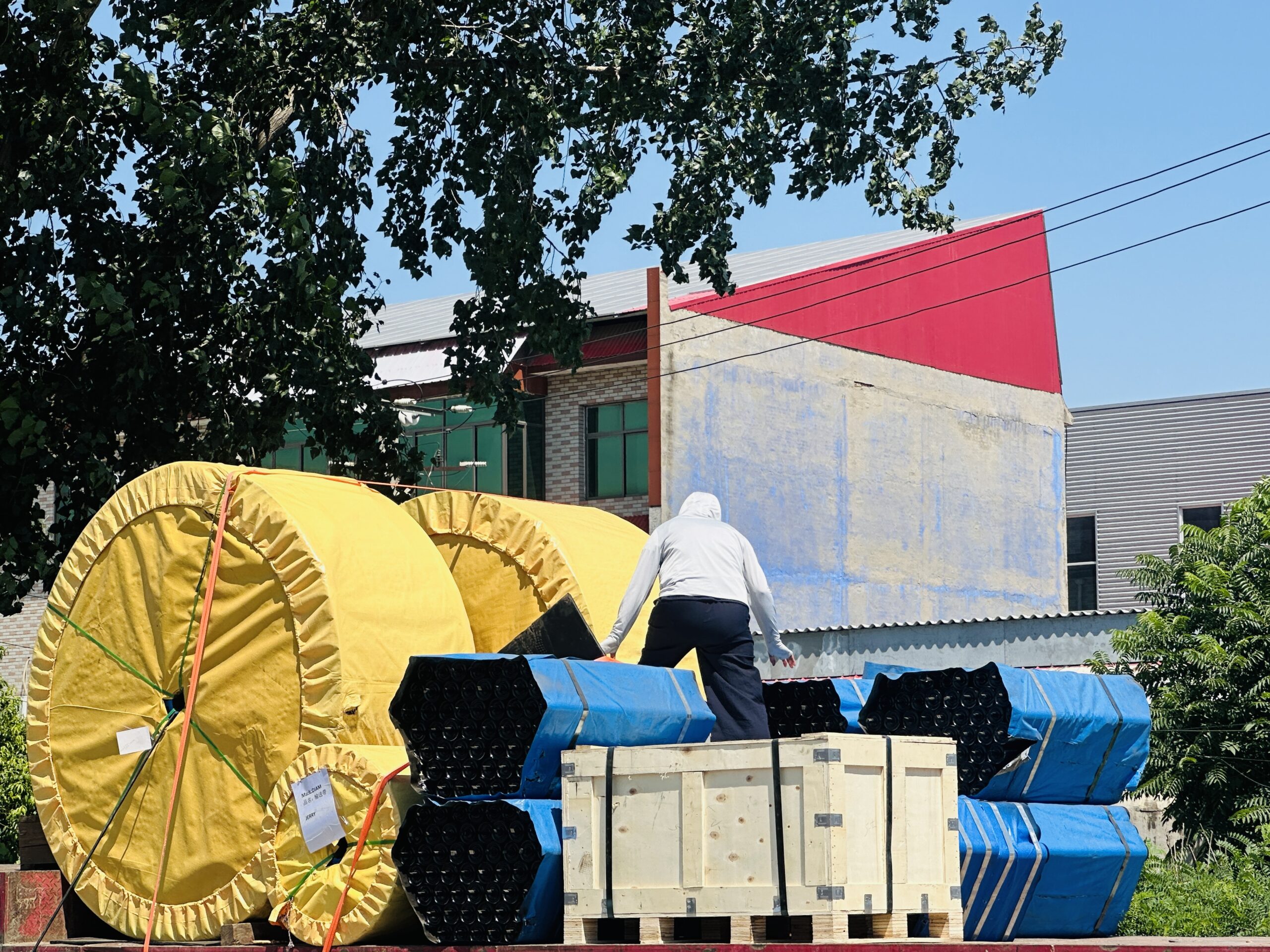
The region is hot and humid, with frequent rain. Engineers adjusted the rubber compound so the cover could hold up on that main line, and each step from carcass selection to finished-belt inspection followed the order. The yard photograph shows the rolls under yellow wrap, with idlers and crates on the same truck.
The same packing and inspection sequence is used for later mining and port orders into Indonesia and the rest of Southeast Asia.
16 Sep 2026 · Stockyard trestle
298 metres of belt, 80 metres above the yard
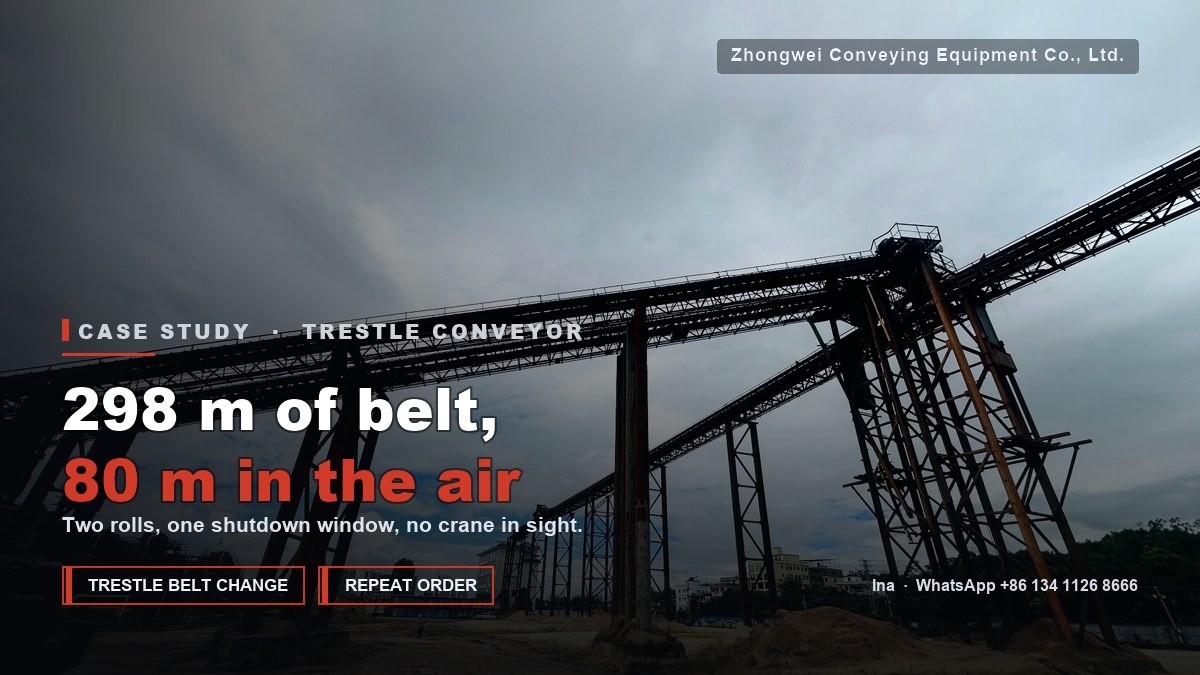
A repeat customer called for a third job, and this one was the long line: 298 metres of belt on a steel trestle, about 80 metres above the yard floor. No crane can reach the conveyor, and no road runs beside it. Two rolls, one shutdown window.
The first order had been a 1,000 mm belt for a short transfer. The second was idlers and a pulley lagging job, both installed by the yard crew. This time the tail cover was worn through to the fabric, four old repairs were already in the belt, and the head splice had started to lift.
The change was written backwards from the restart. A winch at the head did the main pull, with a loader taking the lifts in short steps rather than one high lift. Splices were cured on site. The line restarted inside the window, trained straight, and stopped spilling at the transfer. ZW supplied the belt and the splicing materials, and can send a technician for the change or to supervise the buyer's own crew. A line of this length is typically two to three days, with extra cure time for each additional splice.