Application note
When Should You Use a Chevron Conveyor Belt?
Learn when a chevron conveyor belt is suitable, which application data to provide and how profile height, material and conveyor angle affect belt selection.
ZW Conveyor Belt
On an inclined conveyor, loose material can slide or roll back as the belt rises. This reduces capacity, increases spillage and may create material buildup around the conveyor.
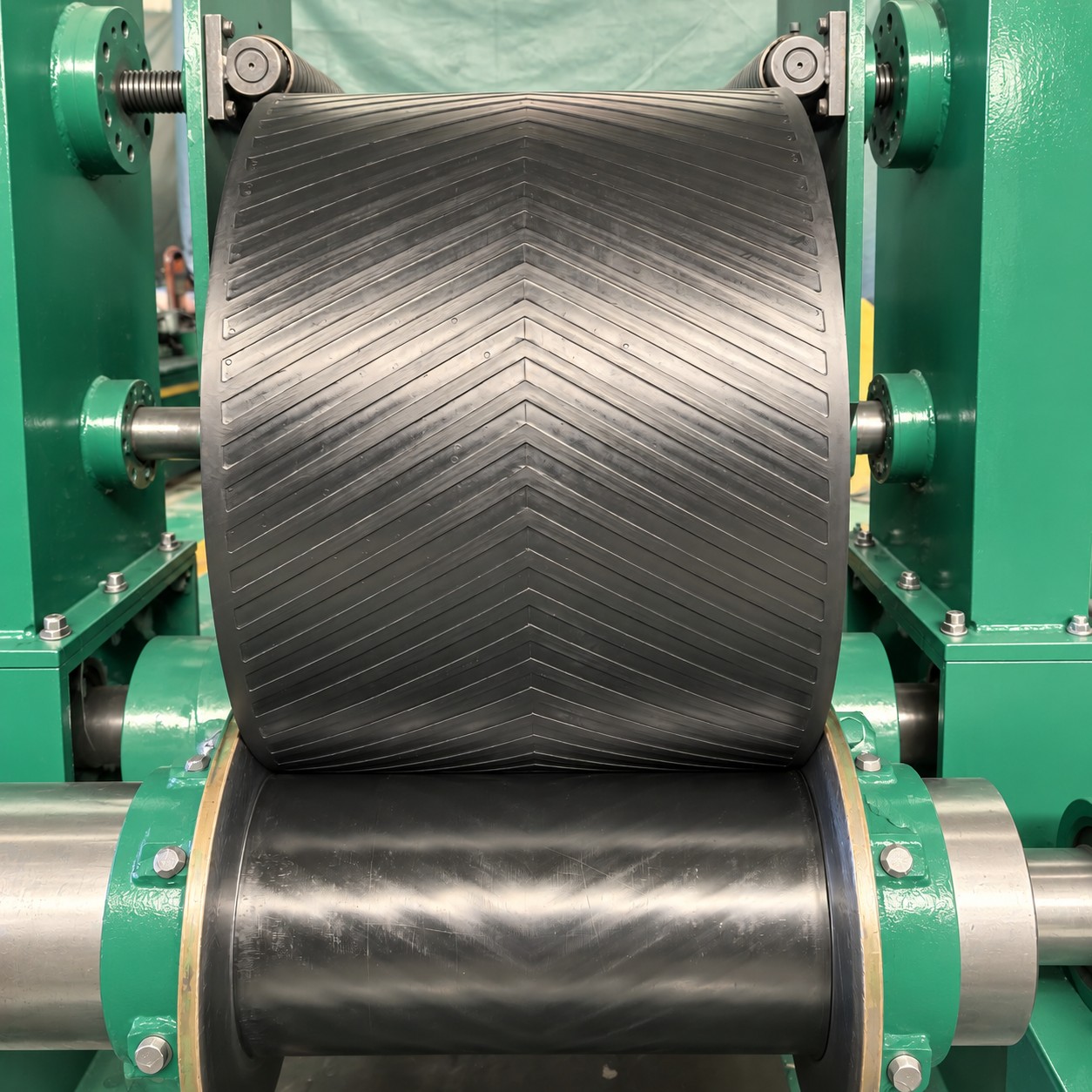
A chevron conveyor belt has molded profiles on its carrying surface. These profiles provide additional grip and help retain material during inclined transport. Chevron belts are commonly used for aggregate, sand, coal, grain, wood chips and other bulk materials, but they are not the correct choice for every incline.
This article explains when to consider a chevron belt and what information should be confirmed before ordering one.
How a Chevron Belt Works
The raised pattern divides and supports the material on the carrying surface. Compared with a smooth belt, the profiles can reduce rollback when the route becomes steeper.
Performance depends on several interacting factors:
- Conveyor inclination
- Material size and shape
- Moisture and flow characteristics
- Profile height and pattern
- Belt speed
- Loading consistency
- Belt cleaning arrangement
A higher profile is not automatically better. It must fit the material, pulley system and discharge arrangement.
Applications Suited to Chevron Belts
Chevron belts are often considered for:
- Quarry and aggregate conveyors
- Sand and gravel handling
- Coal and coke transport
- Grain and agricultural materials
- Wood chips and biomass
- Bag handling
- Mobile crushing and screening equipment
- Recycling and construction materials
The suitability of any belt should still be checked against the actual operating data.
1. Confirm the Conveyor Angle
Provide the actual inclination angle rather than describing the conveyor only as “inclined.” A small change in angle can affect rollback, carrying capacity and the required pattern.
Also provide the lift height and conveyor length. These figures help the supplier understand the complete route and verify belt length information.
For very steep or near-vertical transport, a corrugated sidewall belt with cleats may be more appropriate than a conventional chevron belt.
2. Describe the Material
Material behavior strongly affects profile selection. Provide:
- Material name
- Maximum and typical particle size
- Bulk density
- Moisture content
- Whether the material is sticky or free-flowing
- Whether particles are sharp or abrasive
- Required capacity
Fine dry material, wet sand and large stone do not interact with the same pattern in the same way.
3. Select the Profile Pattern and Height
Common profiles use an open or closed V-shaped arrangement, although designs vary by manufacturer. The required pattern depends on material flow, inclination and discharge behavior.
Consider:
- Whether fine material must pass between profiles
- Whether large particles need additional support
- How easily the belt must discharge at the head pulley
- Whether the return side can accommodate the profile
- How the belt will be cleaned
Confirm the profile drawing before production, including height, width, pitch and orientation.
4. Check the Belt Construction
The base belt must still provide the required tensile strength and cover performance. Specify:
- Belt width and length
- Fabric type and number of plies
- Tensile strength
- Top and bottom cover thickness
- Cover grade
- Edge type
- Endless or open-belt supply
If the conveyed material is hot, oily, corrosive or particularly abrasive, state this during selection. The profile and base belt should be evaluated together.
5. Review Pulleys and Return-Side Support
Raised profiles affect how the belt contacts pulleys, cleaners and return rollers. Before replacing a smooth belt with a chevron belt, confirm that the conveyor structure can accommodate the pattern.
Check:
- Minimum pulley diameters
- Return idler arrangement
- Belt cleaner compatibility
- Transition distances
- Loading and discharge points
- Available clearance around the return strand
Changing only the belt without checking these components can create new tracking or wear problems.
6. Plan for Cleaning and Material Carryback
Profiles can make conventional belt cleaning more difficult. Sticky material may remain between chevrons and return beneath the conveyor.
The cleaning solution should match the pattern and material. Maintenance teams should regularly inspect profile valleys, discharge areas and the return route for buildup.
7. Inspect Profile Wear
During routine maintenance, look for:
- Cuts or missing profile sections
- Separation between profiles and the base belt
- Uneven wear across the belt width
- Cracking at profile roots
- Edge damage
- Material buildup between profiles
Uneven wear may indicate off-center loading or poor tracking rather than normal use alone.
Chevron Belt or Corrugated Sidewall Belt?
A chevron belt is typically used when added surface grip is needed on an inclined route. A corrugated sidewall belt uses sidewalls and transverse cleats to form material pockets, making it suitable for much steeper conveying and layouts where space is limited.
The choice should be based on the required angle, capacity, material characteristics, available space and discharge method.
RFQ Checklist
Send the following information for a quotation:
- Material and maximum particle size
- Moisture and bulk density
- Required capacity
- Conveyor inclination and lift height
- Belt width, length and speed
- Existing belt construction
- Required profile drawing or dimensions
- Pulley diameters
- Operating environment
- Quantity and destination